During the 2026 Super Bowl, Bad Bunny broke a 60 year N.F.L. tradition by being the first artist to mainly sing in Spanish for the halftime show. However, he was not the only one making history: Celimar Rivera Cosme became the first LSPR interpreter for the show. Her work allowed many deaf and hard-of-hearing Puerto Ricans to experience Bad Bunny’s music and their pride.
LSPR, or Lengua de Señas de Puerto Rico, is derived from ASL but has its own style, pacing, and cultural references. Because Bad Bunny often includes Puerto Rican slang and cultural references, LSPR allows interpreters to better capture the lyrics’ meaning instead of just word-for-word translations. Preparing for the Super Bowl halftime show began in November when Celimar was chosen to interpret for Bad Bunny again, and the week leading up to it meant she was listening to his music for over eight hours. The two have worked together in 2022 during the artist’s tour in Puerto Rico and his San Juan residency. Although Celimar has used LSPR most of her life, interpreting music continues to be a challenge as she has to follow the rhythm, speed, and emotion of the performance while also conveying the deeper meaning behind the lyrics.
If ASL and LSPR are both sign languages, why does it matter which one is used? Like spoken language, signs reflect a country’s culture and people, going beyond just hand gestures to include the whole body. LSPR also utilizes more signing space compared to ASL.
Articles for this piece were able to dive deeper into the event, particularly ones from The New York Times and Variety that explained Rivera Cosme’s history with Bad Bunny and the preparation behind the show. Television news like FOX 2 San Francisco, on the other hand, focused more on performance visuals and an interview about how Rivera felt with handling such a big role on a new platform. Online media, such as YouTube Shorts, got straight to the point and highlighted the energy of her performance, even going as far as bringing in past Super Bowl interpreters. Many supported the NFL’s decision, but it also raised controversy, some viewers saying it was “unfair” for the halftime show to mainly represent the Latin community. President Trump, despite not attending in person, claimed it was “absolutely terrible, one of the worst, EVER!…Nobody understands a word this guy is saying…” according to his post on Truth Social. Though Bad Bunny had spoken against ICE (Immigration and Customs Enforcement) at the 68th Annual Grammy Awards, he made no political statements during the Super Bowl.
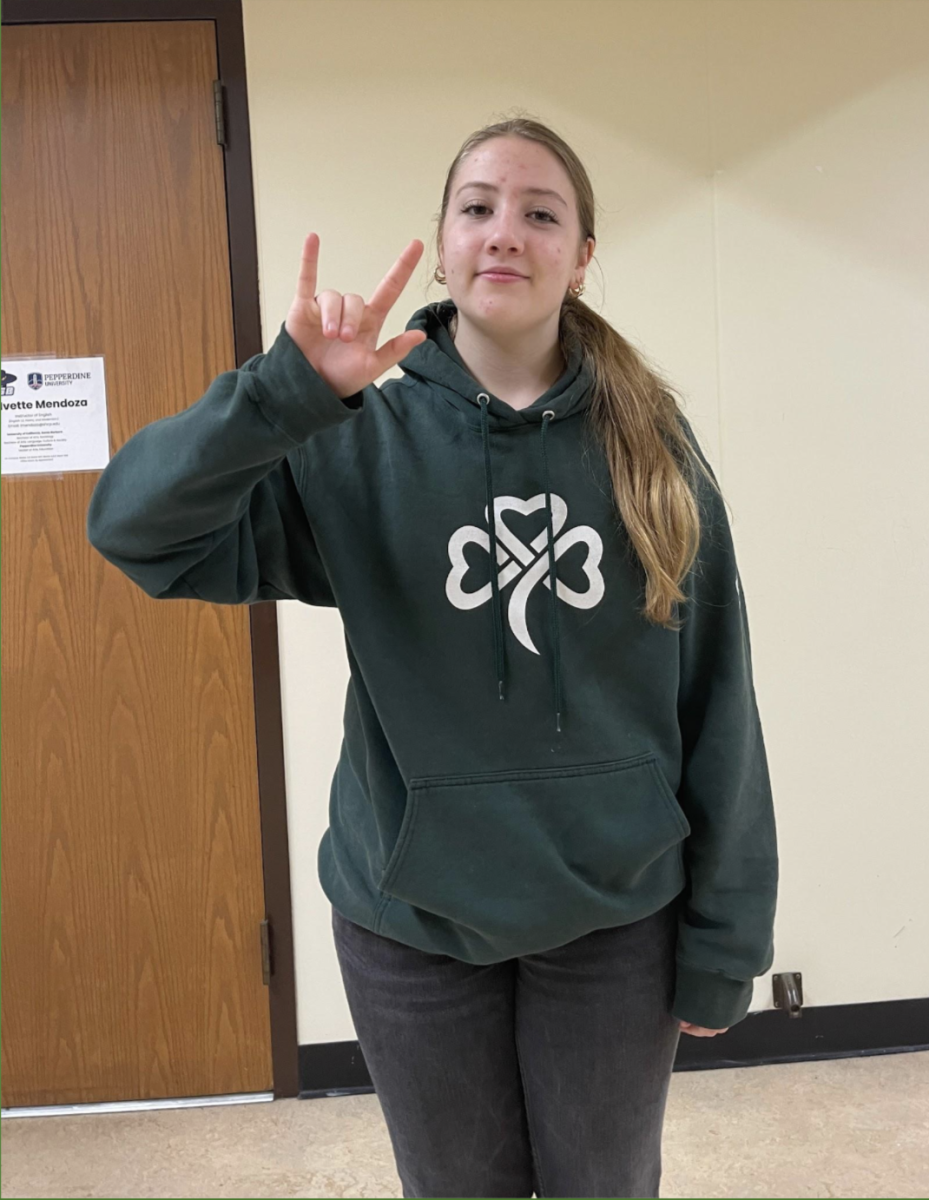
To see how the performance affected SHC, I asked ASL teachers and a student. Mrs. Hren, my ASL teacher, expressed some of her thoughts on the halftime show. “I found their performance to match the mood, tone, and energy of Bad Bunny and his onstage performance. It’s important for interpreters to match the performance being shared because they are the bridge between the hearing performance and deaf viewers.” Ms. Daley, an underclassmen ASL teacher, also emphasized the importance of different sign language representation. “Since ASL is not a universal language, translating songs in Spanish wouldn’t make sense. There are so many words or cultural phrases that wouldn’t necessarily translate to ASL with their full meaning. So I am very glad to see LSPR interpreters, and glad to see LSPR get recognition on such a large scale!” Mr. Green, who is SHC’s Deaf ASL teacher, commented on the difficulties with accessing live sign language platforms: “As a Deaf person, I find it frustrating that neither ASL nor LSPR is shown on the main channel, which would make it easier to provide an inclusive experience for all Deaf viewers. Instead, we have to search a separate website to find a live stream. For instance, we had to wait until after the Super Bowl to find the recorded live stream on YouTube, which I had to do in the past Super Bowl as well.” Elana Quetingco ‘28, Mr. Green’s sophomore student, mentioned, “Learning there was a Puerto Rican Sign Language Interpreter was very exciting and added to Bad Bunny’s message that America should be accessible to everyone, no matter their race or skin color.”
Moments like Celimar Rivera Cosme’s performance, though small for the hearing world, are a huge win for Deaf representation everywhere. By embracing Puerto Rican Sign Language in the Super Bowl halftime show, an endangered language was introduced and seen. With hard work and education, SHC’s community can help keep languages and cultures alive through open minds and one big heart.