
It is safe to assume that most teens and young adults who regularly use their phones and social media have been subject to nagging adults and parents who scold them about their “rotting brains” and screen addictions. In the last few years, I, as well as others, have observed a shift in the culture around phone overuse and dependency, specifically among teens; for example, many have become aware of their poor habits and begun to take action to fight against them. Maybe it’s internalized screen time guilt from Mom and Dad, or maybe it’s a self-realization that things have gone too far.
When social media apps like Instagram and YouTube were first introduced in 2010 and 2005, people were excited. It was new, fun, and a great way to connect with people and feel entertained. When the world went into lockdown due to the COVID-19 pandemic in 2020, everyone, especially teens, had a lot of free time on their hands with nothing to do, so, in came “doom scrolling.” As observed by Ava Pumpelly, who is quoted in the New York Times article “Some ‘Brick’ It. Others Chain It to the Wall,” the excited and curious feelings around social media soon became reliant and anxious, as algorithms continued to feed us more and more content. And who was at the forefront, being completely bombarded with new apps and trends they were being told they needed to engage with to stay connected? Teens.
In a survey conducted by the Pew Research Center in 2025, roughly 1 in 5 teens stated that they were using some form of social media “almost constantly.” So now what? Will these bad phone habits drag on forever? Will teens continue to be sucked into endless TikTok rabbit holes? In the recent past, it was common to see parents of teens being the driving force behind cutting down screen time for their children. When I searched online looking for information about teens and phone usage, many of the videos, such as one I watched titled “Navigating Teen Internet Overuse and Addiction,” directly address parents and give adults tips on how to limit their kids’ social media intake. Most would probably assume that teenagers have zero interest in weaning themselves off of constant social media usage, but this seems to be untrue.
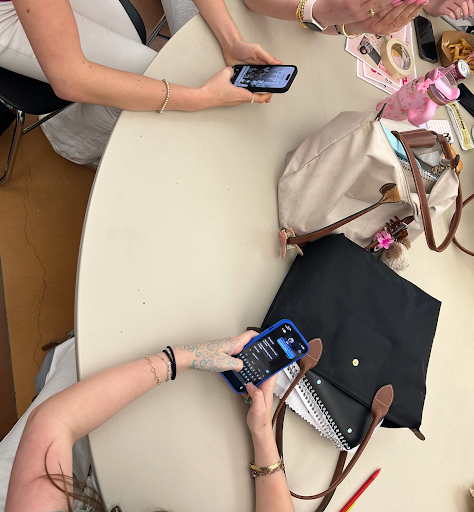
In the past year, I have begun to see many of my peers pushing back on their habits through small acts of self-discipline. At school, I asked some of my tablemates how they handle their screen time consumption. Luccia Panelli ‘27 shared that she uses an app that locks her social media and only allows her to go on certain apps for a short amount of time each day. She affirmed that the restrictions make her feel “really good” about her overall phone usage. Other students, such as Arden Penta ‘27 “try to find other things to do” instead of going on their phones.
This trend of teens against screens does not just exist in the Sacred Heart community. As seen in articles such as “Some ‘Brick’ It. Others Chain It to the Wall” and in short form video content online such as “We’re on a Mission to Stop Doomscrolling”, many young people are now implementing their own new screen habits by doing things such as “Bricking” or locking apps, leaving their phones at home while they work, doing phone cleanses for extended periods of time, or practicing self-discipline when using their phones.
As the world becomes more and more online, it is essential that the younger generation learns how to navigate social media use and manage their intake, as it can be very easy to develop bad phone habits and form a reliance on social media, so seeing this new trend of teens self-regulating offers a lot of hope for our generations future.